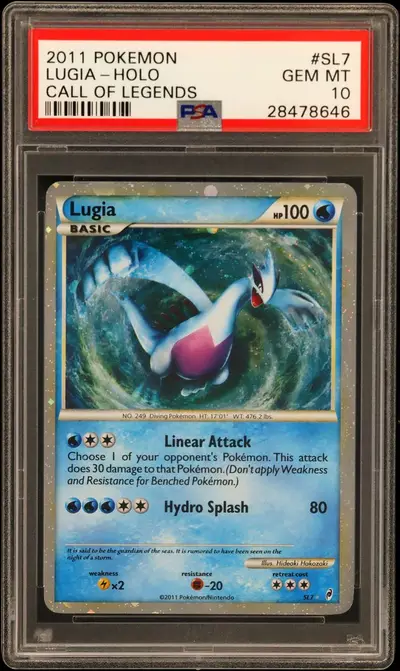
 GEM 10
2011 #SL7 Lugia-Holo PSA 10 Call
POKÉMON $5000 pack
$250,000
epic
Pay USDG on Robinhood Chain. We broker the pack from a Solana vault, custody the slab, and hand you the receipt. Keep it, sell it back at the floor, or ship the physical card.
Read straight from the backing machines. Not estimates, not a mockup — the same numbers the app polls.
Cheapest pack right now: pokemon_25 at $25, average card $27.54, edge −6.38%.
Not concept art, not a mockup — real graded slabs sitting in the vault behind the machines, pulled from the catalogue with their actual insured values. The top card alone is insured at $250,000.
GEM 10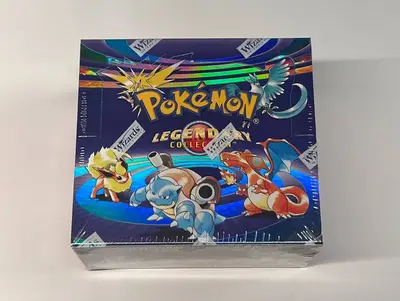
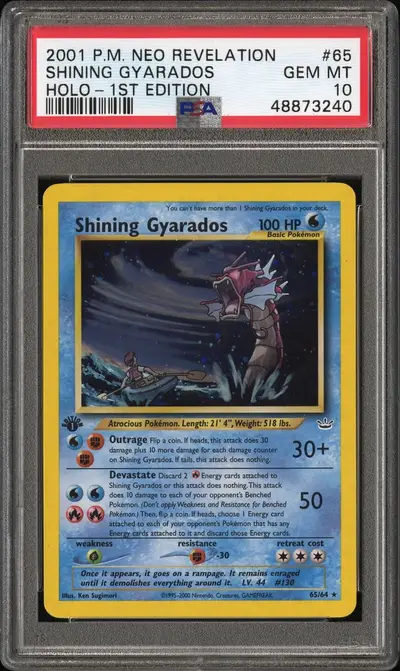 GEM 10
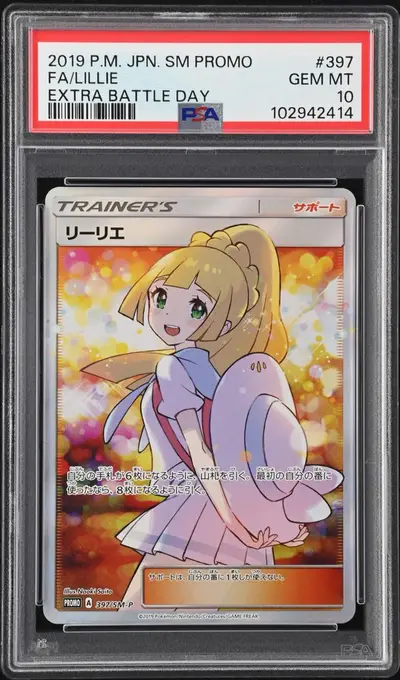 GEM 10
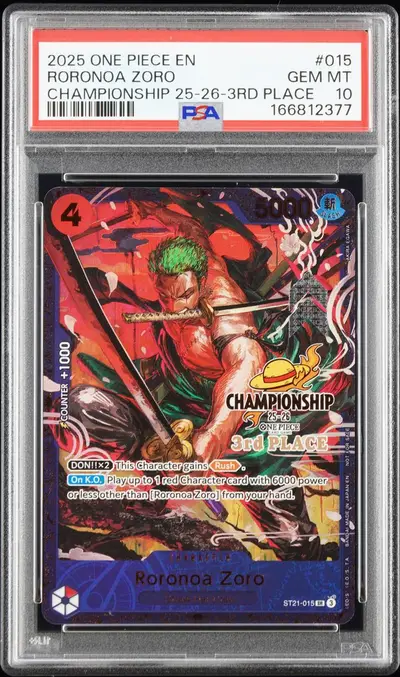 GEM 10
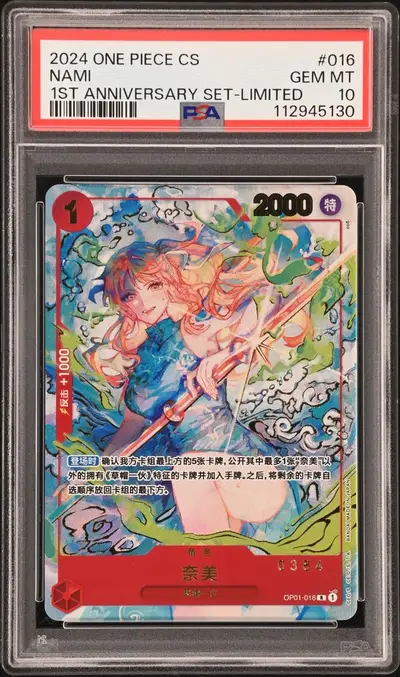 GEM 10
Catalogue read 12 Aug 2026 · 12:54 UTC · images self-hosted, so this page never calls a third-party CDN · insured values are the vault's, not our appraisal. Pulling one of these is a 1% epic outcome — see the edge calculator before you get ideas.
Real machines, real odds, real stock. Hover any card for the rarity split — common, uncommon, rare, epic — read from the backing API rather than a pitch deck.
15,303 cards in stock
10,632 cards in stock
4,093 cards in stock
3,917 cards in stock
854 cards in stock
466 cards in stock
2,327 cards in stock
560 cards in stock
706 cards in stock
593 cards in stock
4,565 cards in stock
3,733 cards in stock
376 cards in stock
437 cards in stock
403 cards in stock
1,856 cards in stock
1,269 cards in stock
670 cards in stock
498 cards in stock
Bar segments, left to right: common · uncommon · rare · epic. Colour is backed by a text label on hover, never the only signal.
EV, odds and stock move all day and vanish. We poll and bank the lot so a trend exists at all. Sort it, filter it — this is the same data the app reads, just frozen at build time.
| water_100 | $100 | $107.12 | 107.1% | 90% | $96.41 | −3.59% |
|---|---|---|---|---|---|---|
| onepiece_1000 | $1,000 | $1,024.35 | 102.4% | 93% | $952.64 | −4.74% |
| pokemon_1000 | $1,000 | $1,023.05 | 102.3% | 93% | $951.44 | −4.86% |
| onepiece_250 | $250 | $262.94 | 105.2% | 90% | $236.65 | −5.34% |
| pokemon_5000 | $5,000 | $5,083.32 | 101.7% | 93% | $4,727.49 | −5.45% |
| baseball_100 | $100 | $105.04 | 105.0% | 90% | $94.53 | −5.47% |
| sports_100 | $100 | $105.02 | 105.0% | 90% | $94.52 | −5.48% |
| basketball_250 | $250 | $262.44 | 105.0% | 90% | $236.20 | −5.52% |
| football_250 | $250 | $262.37 | 104.9% | 90% | $236.13 | −5.55% |
| basketball_100 | $100 | $104.94 | 104.9% | 90% | $94.44 | −5.56% |
| baseball_250 | $250 | $262.17 | 104.9% | 90% | $235.96 | −5.62% |
| football_100 | $100 | $104.84 | 104.8% | 90% | $94.36 | −5.64% |
| pokemon_2500 | $2,500 | $2,534.31 | 101.4% | 93% | $2,356.91 | −5.72% |
| pokemon_250 | $250 | $261.51 | 104.6% | 90% | $235.36 | −5.86% |
| onepiece_50 | $50 | $55.21 | 110.4% | 85% | $46.93 | −6.14% |
| pokemon_25 | $25 | $27.54 | 110.1% | 85% | $23.41 | −6.38% |
| sealed_80 | $80 | $83.17 | 104.0% | 90% | $74.85 | −6.43% |
| pokemon_50 | $50 | $54.95 | 109.9% | 85% | $46.71 | −6.58% |
| anime_75 | $75 | $82.37 | 109.8% | 85% | $70.01 | −6.65% |
Thinnest edge in this view: water_100 at −3.59%. Still a cost, not a strategy.
Deliberately missing: a trend column. We only began banking snapshots on 12 Aug 2026, so there is no history to draw yet — and an empty column beats a fabricated sparkline. That gap closes on its own; every day the indexer runs, the archive grows and the distance a competitor would have to make up widens.
Almost everyone gets this backwards, including people who rip daily. Pick a pack, pick a rip count, and watch the arithmetic — on real numbers, read from the backing API.
Expected value over many rips, not a forecast of yours. Any single rip is pure chance — you can hit an epic first try or go 10 deep with nothing. The one thing that is predictable is the −6.58% edge, and it applies whether you win or lose. Ripping is entertainment and collecting, never income.
Solana is the kitchen. You see the meal and the receipt, never the stove.
Connect the Robinhood Chain wallet you already have. Pick a pack, see its live EV, odds and stock, and the exact USDG price locked for a short window.
Our relayer pays the vault out of a pre-funded float and the pack opens on Solana. You are not bridging. You sit on one screen for ten to forty seconds.
One real graded card, its insured value, what you paid — plus the Solana tx hash and VRF proof. Every reveal carries a verify link anyone can open.
Keep it in your onchain collection, take the buyback floor as USDG back on Robinhood Chain, or redeem the physical slab to your door.
The cards, the vault, the VRF and the physical shipping belong to Collector Crypt. GASHA builds the Robinhood Chain surface, the broker engine, the custody and proof layer, and the data terminal. We do not build the machine and we do not set the odds.
The uncomfortable fact about any custodial gacha: the randomness happens somewhere you cannot see. Ours fires on Solana, under our account. Left alone that means taking our word for it — so we don't leave it alone.
Every rip permanently stores four things, and the reveal hands you all of them: the Robinhood Chain payment, the Solana pack-open transaction, the VRF request and proof, and the resulting card with its insured value.
The reveal links out to the explorer and to a public verify page — /verify/:ripId — where roll, tier and card each trace back to the same proof the machine used. No wallet needed to look, so you can hand the link to a stranger.
Provably fair should not be a paragraph in a whitepaper. It should be a button. Ours is — and it works even though the randomness lives on a chain you never touch.
the USDG that left your wallet
the vault transaction we paid for
the randomness the machine actually used
every step derived from that proof
what it cost against what came out
Layout of the record attached to every rip. Values are placeholders — real ones appear on your own reveal, and on the public verify page for anybody else's.
USDG in, a float out, graded cards in custody. Custodial gacha gets attacked, and pretending otherwise is how projects become postmortems.
Majority of value in cold storage. Those seed phrases never touch a server.
Signing keys sit in one service, separate from the API. Owning the API does not mean being able to sign.
The signer can pay the vault and approved buyback targets. Not “shouldn’t” — cannot.
A bounded blast radius. Even a fully successful attack hits a ceiling it cannot raise.
Funds moving fires instantly. What decides how bad an incident gets is the gap between it happening and us knowing.
Topped up from cold on a schedule instead of left standing as a prize.
Nothing internet-facing touches the Docker socket. Secrets stay server-side, never in a browser bundle.
Treasury and float addresses are public, so outflows are auditable by anyone who cares to check.
Security is enforcement, not obscurity.
The engine is internet-facing because the browser has to reach it. It is safe because it authorises every request — not because anyone assumes the URL went unnoticed. This landing page holds zero credentials and zero wallet code; it is a pile of static files.
Most of this category hides these paragraphs in a footer. For a custodial product, saying them plainly is the trust feature.
You pay USDG on Robinhood Chain. We take that payment, pay the vault on Solana from our own pre-funded float, and the pack opens there. The card is held in GASHA custody and represented to you back on Robinhood Chain. You are buying a brokered service, not operating on two chains.
No. Not to browse, rip, buy back or redeem. You never create one, never fund one, never sign anything on Solana. It shows up in exactly one place — the proof links on your reveal.
Because we publish the trail. Every rip stores the Robinhood Chain payment, the Solana pack-open transaction, and the VRF request and proof. The reveal links to the explorer and to a public verify page. Anyone can open it, no wallet required.
Custody always requires some trust, and anyone claiming otherwise is selling something. What we can do is bound it: majority of value in cold storage with seeds off-server, signing keys in an isolated service that can only pay an allowlist, per-transaction and daily limits, an alarm on every outflow, and published wallets you can audit.
An instant offer to buy your pull back at a fixed share of its insured value — currently 85% to 93% depending on the pack — paid in USDG on Robinhood Chain. It exists so a pull is never worthless. A floor, not a promise of profit.
No, and we will never market it as one. Expected payout after buyback sits below pack price by design. Rip because opening real graded cards is fun and you want the cards.
Across all 19 public machines it runs 3.59% to 6.65%, median 5.56%. Where it comes from matters: expected card value is actually above pack price (101.4–110.4%). The edge is entirely the buyback haircut. The calculator above computes it per pack.
Yes. Redemption ships the actual graded slab to your address — one of the three things you can do with a pull, alongside keeping it or taking the buyback.
In Collector Crypt's vault. They are the custodian of the physical slabs and they handle shipping. GASHA holds the onchain representation and the custody ledger recording who owns what.
No, to both. GASHA is an independent product, not affiliated with, endorsed by or sponsored by Collector Crypt, whose vault and VRF back the cards — nor by Robinhood Markets, Inc. We name Robinhood Chain only to identify the public network we settle on.
Fee discounts, free rips funded from protocol fees actually collected, premium terminal access, tier status, and a governance signal on the fee split. What it never gets you is better odds — those belong to the machine's VRF and are identical for everyone. Rips are paid in USDG, so playing is never gated behind buying a volatile asset.
Not yet. Layer 1 — catalog, EV terminal, odds, public PnL — is read-only and needs no permissions from anyone. Ripping is Layer 2, and it opens only once the vault resale permission, the wallet security architecture and float management are all in place.